A light-year measures distance, not time
About 9.46 trillion km — starlight takes years to arrive, so the night sky is a window into the past.
1A light-year is often mistaken for a unit of time. It measures distance: how far light travels in one year, about 9.46 trillion (9.46×10¹²) kilometres. Light moves at roughly 300,000 km per second — it could lap Earth in about 0.13 seconds — yet on the scale of the universe, even light has to take its time.
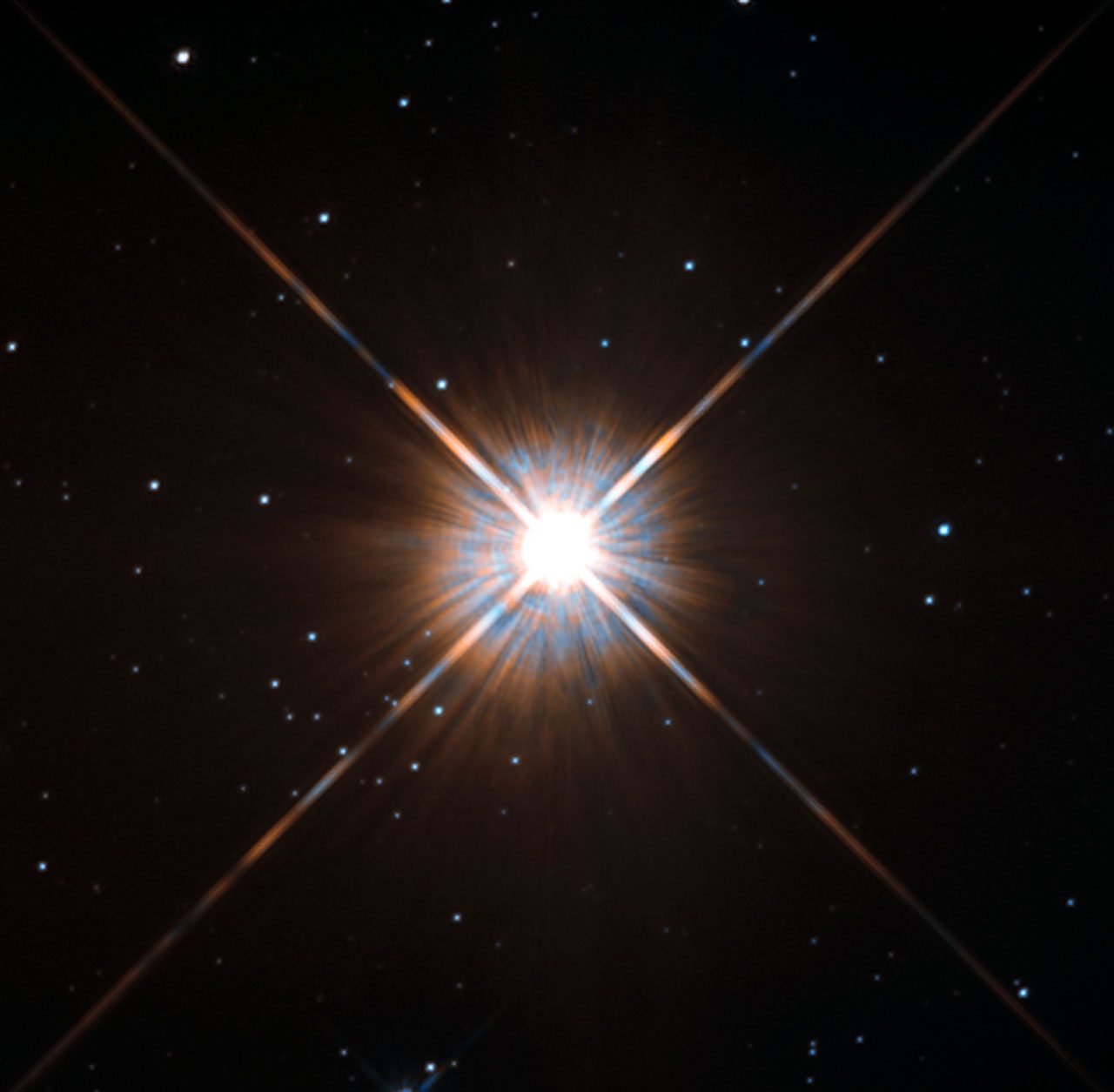
2The nearest star to the Sun, Proxima Centauri, is about 4.2 light-years away: the light you see tonight left it more than four years ago. Telescopes looking at distant galaxies are seeing them as they were millions or even billions of years ago — astronomers like to say that looking up is looking back.
3Sunlight takes about 8 minutes 20 seconds to reach Earth. If the Sun switched off right now, we would only find out eight-plus minutes later. On cosmic scales, 'now' is not the same moment everywhere — distance means every look is a look into the past.
One light-year = the distance light covers in a year (about 9.46 trillion km). Looking at stars is looking at history.