A rainbow is really a full circle
From the ground you only see half of it; from an aircraft you can see the whole ring.
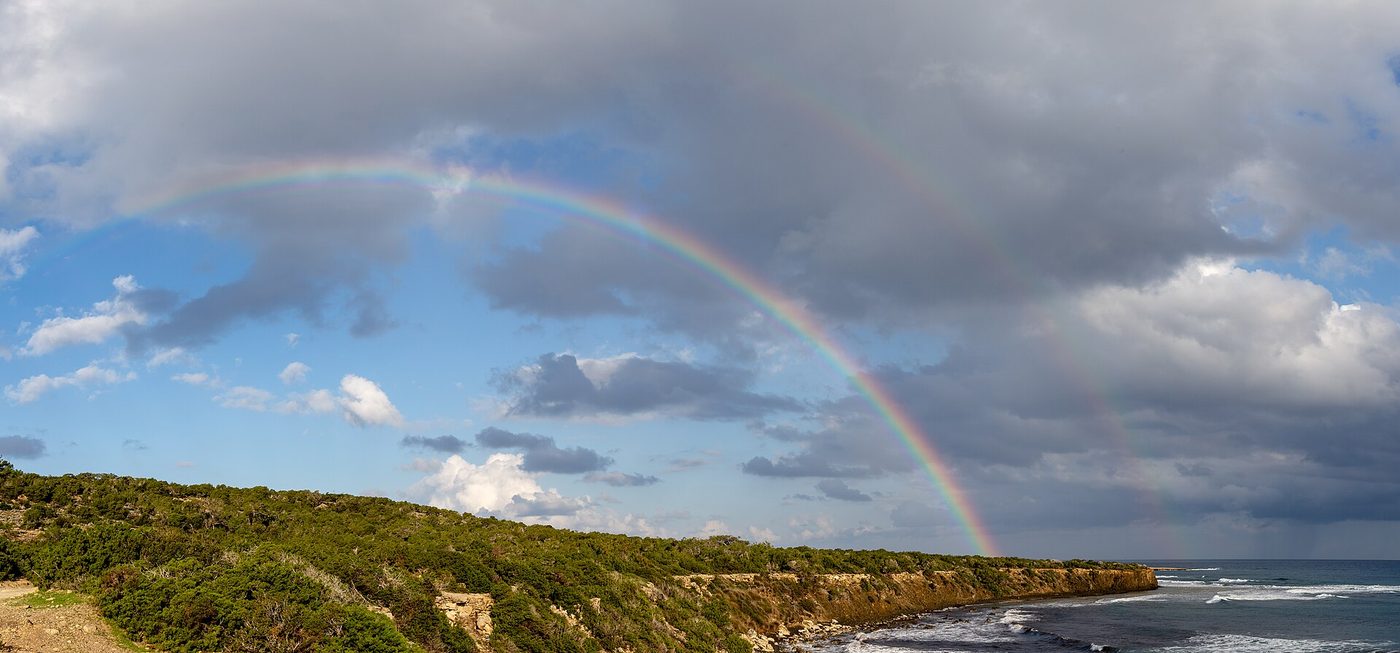
1A rainbow is not a bridge in the sky but a circle centred on the 'antisolar point' — the direction exactly opposite the Sun, marked by the shadow of your own head. Every drop in the primary bow lies about 42° from that point, returning sunlight to your eye after one refraction, one internal reflection, and another refraction.
2From the ground the lower half is hidden below the horizon: the higher the Sun, the lower the bow — and once the Sun climbs more than about 42° above the horizon, the primary bow sinks out of sight entirely. That is why rainbows favour early morning and late afternoon. With a wide enough view — from a plane, or beside a waterfall — you can see the full circular ring.
3The secondary bow comes from light reflecting twice inside each drop. It sits at about 51°, outside the primary, with its colours reversed — red on the inside — and noticeably fainter. Next time you spot a double rainbow, look for the flipped twin above it.
The primary bow circles the antisolar point at about 42°. Ground: half circle; aircraft: full circle.