Sunsets on Mars are blue
Same physics, different atmospheres, opposite sunset colours.
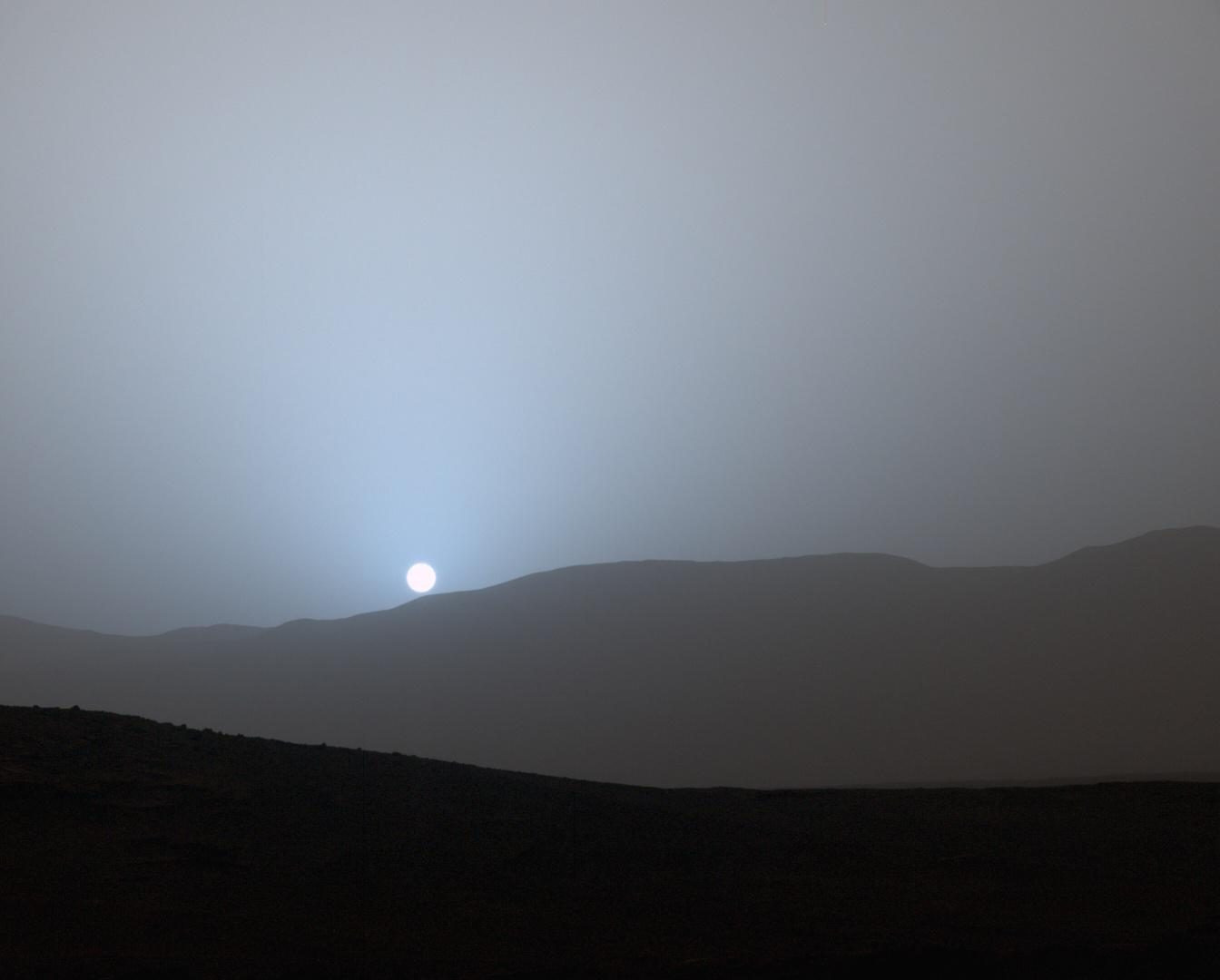
1On Earth, sunsets glow red; on Mars it is the reverse — a hazy blue-grey ring around the setting Sun. In 2015 NASA's Curiosity rover photographed just such a sunset on the Martian surface.
2The physics is the same as Earth's: incoming sunlight scattered by the atmosphere. But Mars's air is full of fine dust that scatters red light strongly, leaving blue light concentrated near the Sun — the exact opposite of Earth's air molecules, which scatter blue light across the whole sky (blue days, red sunsets).
3One more difference: the Sun looks much smaller from Mars. Because Mars orbits farther out, the Sun's apparent size is only about two-thirds of what we see from Earth.
Martian dust scatters red light away, leaving blue near the Sun — Earth's sunset rule flipped.