Chang'e, the Jade Rabbit and the toad: stories on the Moon
A thousand years ago, Chinese artisans cast the Moon's mythical residents into bronze.
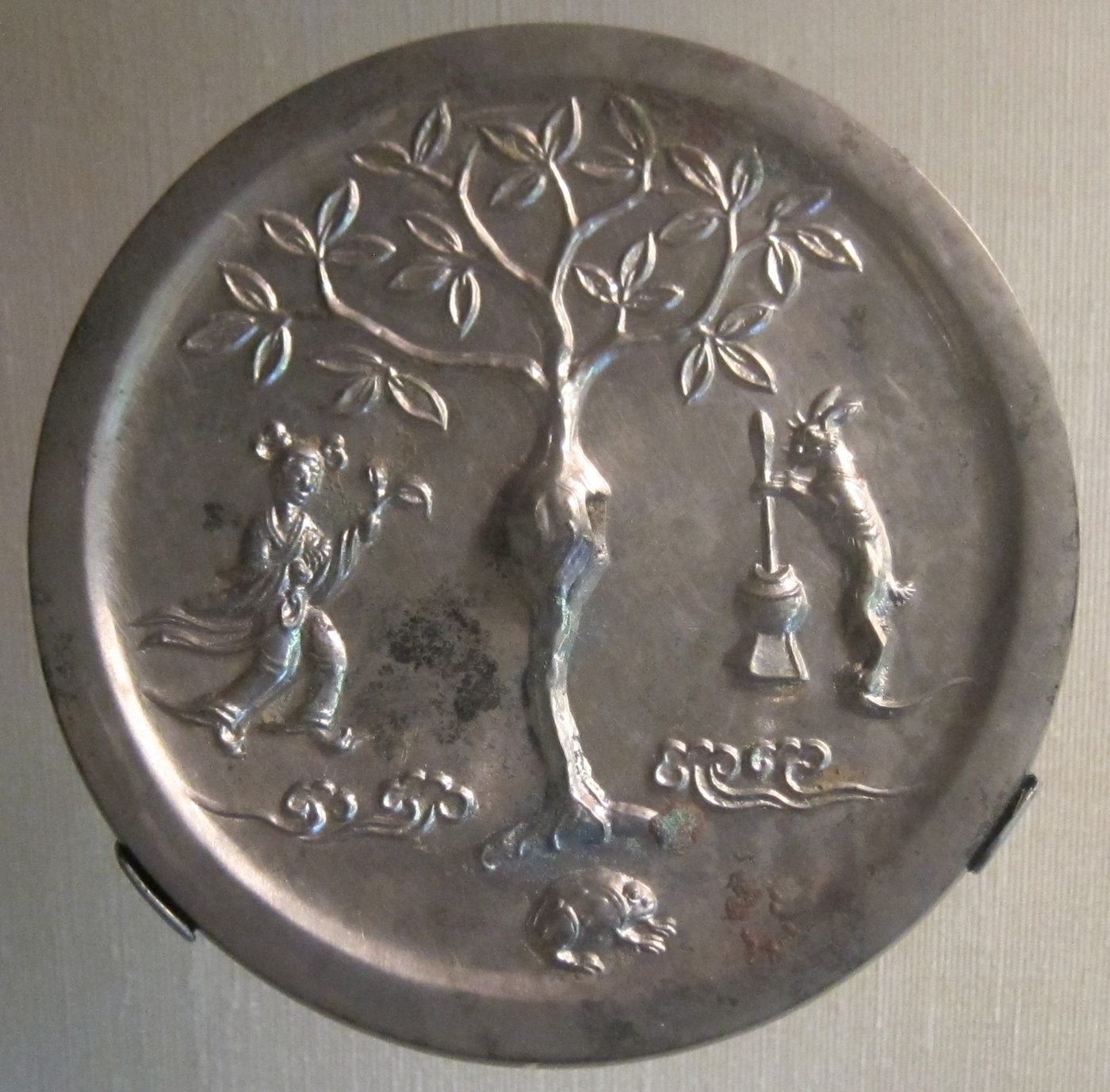
1In Chinese myth, the archer Hou Yi shot down nine suns to save the world, and the goddess Queen Mother of the West rewarded him with an elixir of immortality. His wife Chang'e swallowed it — to keep it from a villain, or out of curiosity, depending on the telling — and grew so light she drifted all the way to the Moon, where she lives in the Cold Palace. The Moon's shadows became the palace, the cassia tree and the Jade Rabbit pounding medicine.
2The story ran deep: Tang dynasty artisans cast Chang'e, the rabbit, the toad and the cassia tree onto the same bronze mirror, and the Mid-Autumn Festival's moon-gazing and mooncakes still carry the tale. The Tang poet Li Shangyin wrote of 'Chang'e, regretting the stolen elixir, night after night alone over the blue sea and sky'.
3Best of all, the myth did not stay a story: China's lunar exploration programme is named Chang'e, its rovers are the Jade Rabbits, and its relay satellite is the Magpie Bridge. Ancient names are now paving the way for modern science — myth and science met again on the Moon.
The Chang'e legend and the Jade Rabbit gave China's real lunar probes their names.