The Big Dipper and Polaris: the night sky's compass
Extend the two pointer stars five times — and there is Polaris.
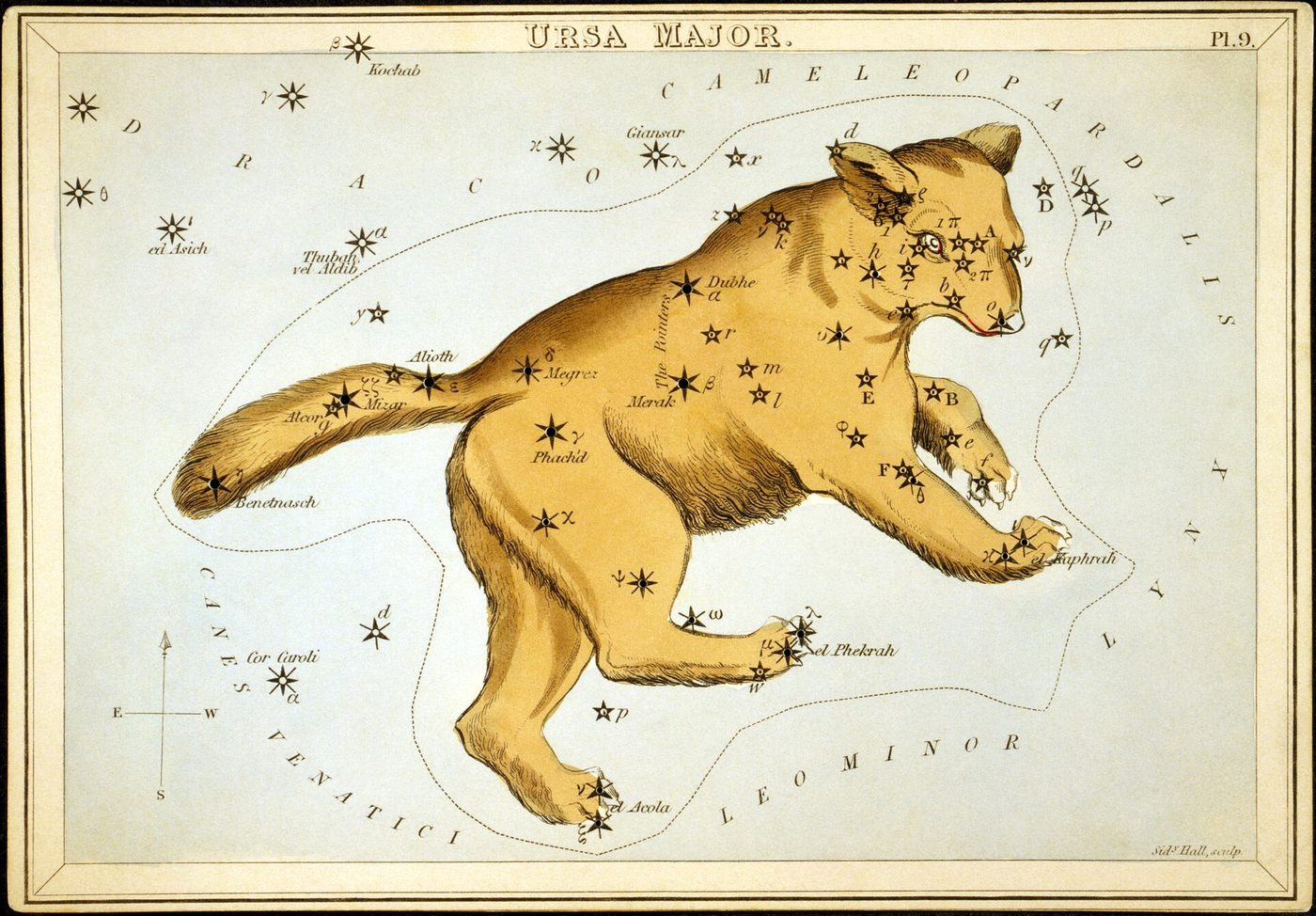
1The Big Dipper is the most famous star pattern in the sky: seven bright stars in the shape of a ladle. The Greeks saw the back and tail of a great bear; Chinese astronomers saw a dipper and used the handle's direction to mark the seasons — ancient texts note that when the handle points east, it is spring.
2The Dipper is not a constellation of its own but part of Ursa Major. Extend the line of the two pointer stars at the ladle's edge about five times, and you arrive at Polaris, the North Star — almost motionless through the night, guiding travellers north for millennia.
3Even Polaris's job rotates: Earth's axis wobbles slowly like a spinning top, so a few thousand years ago a different star sat over the North Pole — and a different star will take the post in the future.
Pointer stars times five equals Polaris — a free compass.